
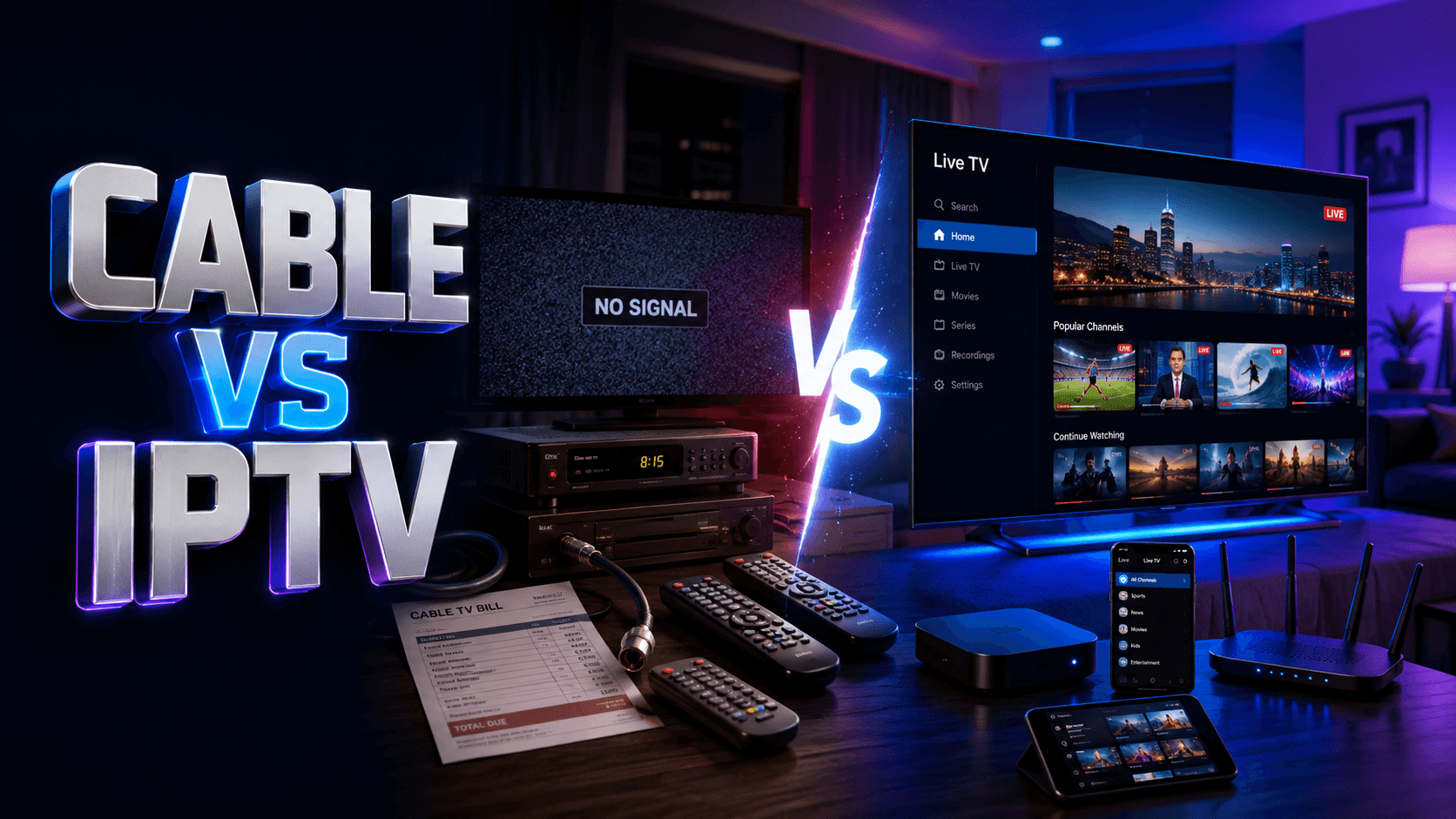
The cable TV vs IPTV comparison reveals significant differences in pricing structure, equipment requirements, channel flexibility, and viewing experience that impact USA households’ entertainment budgets and satisfaction. As more Americans evaluate cutting the cord in 2026, understanding the true costs and capabilities of each technology helps you make an informed decision based on your specific viewing habits, internet infrastructure, and household needs.
Understanding the Core Technology Difference
In this cable TV vs IPTV comparison, the fundamental distinction lies in delivery method. Cable TV transmits signals through coaxial cables connected to a physical network infrastructure, requiring professional installation and specialized equipment. IPTV (Internet Protocol Television) delivers content over your existing broadband internet connection, streaming channels through apps on smart TVs, streaming devices, phones, and tablets.
This technical difference impacts everything from installation costs to channel flexibility to viewing options across devices. The USA IPTV service comparison guide providers leverage internet delivery to offer more flexible packages and multi-device support compared to traditional cable’s single-location setup.
Detailed Cost Comparison
Monthly Subscription Fees
Cable TV packages typically range from $50-$150+ monthly depending on channel tiers, with promotional rates expiring after 12-24 months and auto-renewing at higher standard rates. Hidden broadcast fees, regional sports fees, and franchise taxes frequently add $15-30 to the advertised price.
IPTV services usually cost $15-80 monthly with more transparent pricing, though you must factor in your internet subscription cost if evaluating total expenses. When conducting a cable TV vs IPTV comparison, calculate both services’ 24-month total cost including all fees for accuracy.
Equipment and Installation Costs
| Cost Category | Cable TV | IPTV |
|---|---|---|
| Installation | $50-$200 professional installation | $0 self-installation |
| Equipment Rental | $10-$20/month per cable box/DVR | $0 (use existing devices) |
| Initial Hardware | Included in rental fees | $0-$50 if buying Fire Stick, Roku, etc. |
| Additional Rooms | $10+/month per additional box | $0-$10 depending on provider stream limits |
Internet Requirements
Cable TV operates independently of your internet connection, though most subscribers bundle services. IPTV absolutely requires reliable broadband—test your speed at Speedtest.net to ensure you have at least 25 Mbps for one HD stream, more for 4K or multiple simultaneous viewers. Budget for internet upgrades if needed when comparing total costs.
Explore Modern IPTV Options
See how IPTV providers compare on pricing, features, and flexibility for 2026. Calculate your potential savings vs. cable.
Channel Selection and Content
Cable TV providers offer established relationships with major networks, comprehensive local channel coverage, and reliable sports programming. However, you often pay for hundreds of channels you never watch due to bundled tier structures.
IPTV services vary widely in channel offerings. Quality providers license the same major networks as cable but offer more customizable packages. In this cable TV vs IPTV comparison, verify that your specific must-have channels are available before switching, particularly local broadcast stations and regional sports networks.
Quality and Reliability Comparison
Picture Quality
Modern cable systems support HD universally and 4K selectively. IPTV quality depends on your internet speed and provider infrastructure. Both can deliver excellent picture quality when properly configured.
Service Reliability
Cable TV operates on dedicated infrastructure less affected by household internet usage. IPTV streams compete with other internet traffic, making network management crucial.
Flexibility and Convenience
In the cable TV vs IPTV comparison, IPTV dramatically wins on flexibility. Watch on any internet-connected device, continue programs when switching between TV and phone, and access content while traveling. Cable restricts viewing to physical cable-connected TVs unless you pay extra for mobile apps.
IPTV typically offers easier cancellation without returning equipment or scheduling technician visits. Cable often requires contracts with early termination fees and equipment return processes.
Related USA IPTV Guides
Continue with the IPTV buying checklist for US households or compare the criteria in our complete USA service guide.
FAQ
Is IPTV cheaper than cable TV in 2026?
IPTV usually costs less when comparing equivalent channel counts, primarily due to eliminated equipment rental fees and installation charges. However, calculate total costs including internet service, any needed streaming devices, and compare promotional vs. standard renewal rates for both options.
Does IPTV have better picture quality than cable?
Both technologies can deliver excellent HD and 4K quality. Cable provides more consistent quality regardless of household internet usage, while IPTV quality varies based on your broadband speed, network congestion, and provider infrastructure. Properly configured IPTV on adequate internet matches or exceeds cable quality.
Can IPTV completely replace cable TV?
For many households, yes. IPTV can provide equivalent channel selection, superior flexibility, and lower costs. However, verify your specific must-have channels are available, ensure you have adequate internet speeds (25+ Mbps), and confirm acceptable streaming reliability before canceling cable completely.
Which is more reliable, cable or IPTV?
Cable TV operates on dedicated infrastructure independent of your internet usage, providing more consistent service during peak household internet activity. IPTV reliability depends on your broadband quality, provider server capacity, and network management. Both experience occasional outages, but for different reasons.
Ready for the Best IPTV Subscription?
Join thousands of satisfied customers with the best and fastest family subscription in the USA, UK, Canada & Australia.