
Learning how to stop IPTV buffering USA households experience requires systematic diagnosis of network issues, device limitations, provider capacity, and configuration problems. Buffering ruins the viewing experience during critical sports moments, but most issues stem from fixable problems with your home network, streaming device settings, or internet service rather than inherent IPTV limitations.
Understanding Why IPTV Buffering Happens
To stop IPTV buffering USA viewers face, you must first understand the root causes. IPTV streams require continuous data flow from your provider’s servers through your internet service to your device. Interruptions anywhere in this chain cause buffering. Common culprits include insufficient bandwidth, Wi-Fi interference, router congestion, device performance issues, or provider server overload.
The USA IPTV service comparison guide providers invest in robust server infrastructure and use adaptive bitrate streaming. However, even premium providers cannot overcome local network limitations in your home.
Step 1: Diagnose Your Internet Connection
Start troubleshooting buffering issues by testing your actual internet speed using Speedtest.net from the device experiencing problems. Run tests during the hours when you typically watch television.
Minimum Speed Requirements
- SD Streaming: 3-5 Mbps per stream
- HD Streaming: 10-15 Mbps per stream
- 4K Streaming: 25-30 Mbps per stream
- Multiple Streams: Add 10-15 Mbps per additional viewer
Step 2: Optimize Your Home Network
Use Wired Connections
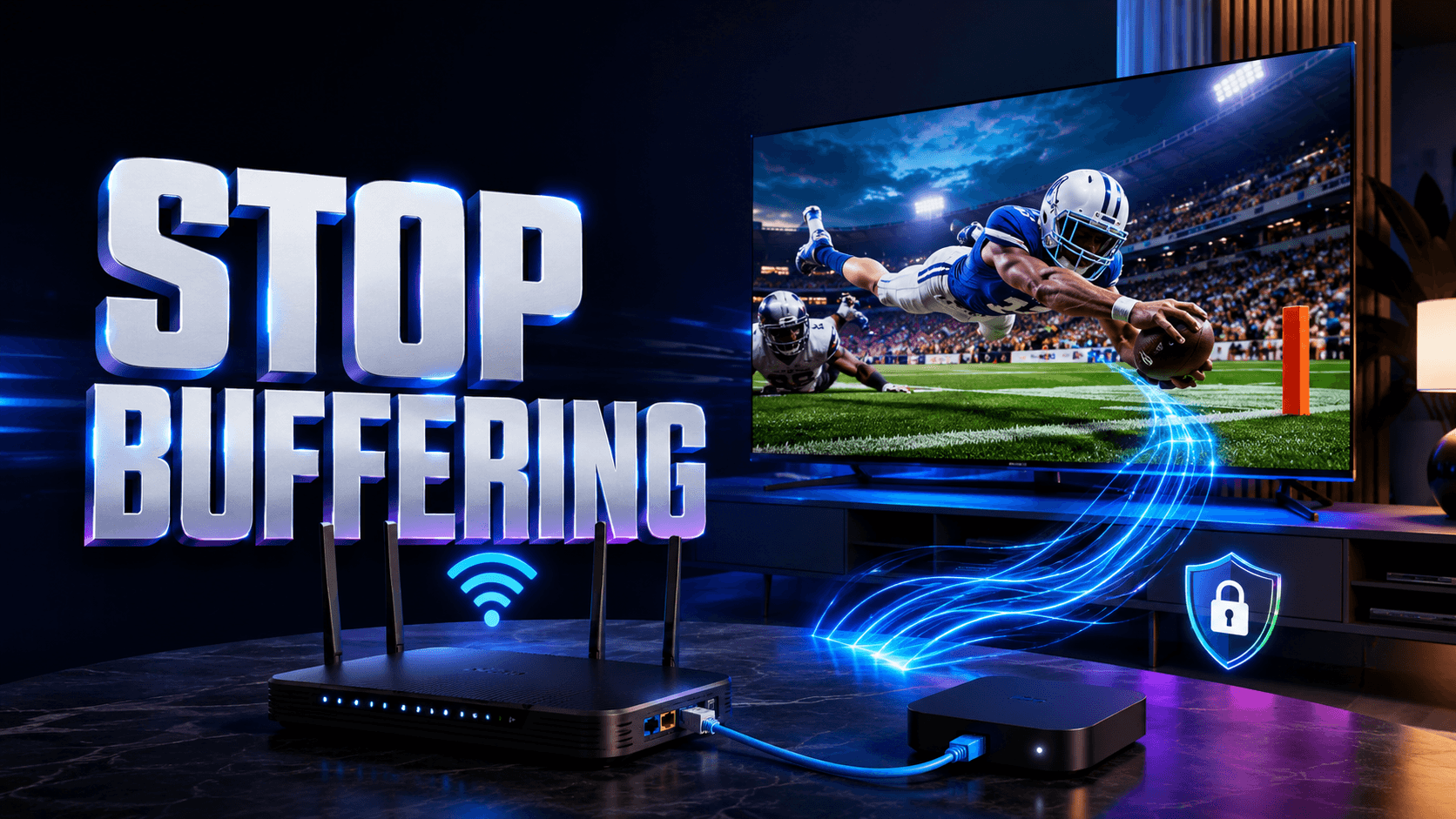
The single most effective way to stop IPTV buffering USA households encounter is switching from Wi-Fi to Ethernet. Wired connections eliminate interference and signal degradation. Use Cat6 Ethernet cables for gigabit speeds and connect your primary streaming TV directly to your router.
Improve Wi-Fi Performance
When Ethernet isn’t practical, optimize Wi-Fi by switching to the 5 GHz band, positioning your router centrally with minimal obstacles, updating router firmware, and reducing the number of connected devices during streaming.
Reduce Network Congestion
Pause downloads, cloud backups, system updates, and bandwidth-intensive applications during critical viewing. Enable Quality of Service (QoS) settings in your router to prioritize streaming traffic.
Upgrade to Buffer-Free IPTV
Compare providers with superior infrastructure and proven reliability to stop IPTV buffering permanently.
Step 3: Optimize Streaming Device Settings
To stop IPTV buffering USA devices experience, ensure your Fire Stick, Roku, Android TV box, or smart TV operates efficiently. Close background applications consuming memory and processing power. Clear app cache regularly through device settings. Restart your streaming device weekly to refresh system resources.
Update your IPTV app to the latest version—developers frequently optimize buffering issues. Adjust video quality settings in the app if buffering persists; manually selecting a lower resolution may provide smoother playback.
Step 4: When and How to Use VPN
VPNs can sometimes help stop IPTV buffering USA customers experience, but they’re not automatic solutions. VPNs work by encrypting traffic and routing it through different servers, which can bypass internet service provider throttling or inefficient routing paths.
VPN Best Practices
- Choose reputable VPN services with high-speed servers
- Connect to VPN servers close to your actual location
- Test streaming with and without VPN to measure actual performance
- Understand that VPNs add encryption overhead that can reduce speeds
Step 5: Evaluate Your IPTV Provider
If you’ve optimized everything and still can’t stop IPTV buffering USA streams experience, the problem may be provider-side. Test other streaming services on the same device. If those work perfectly while IPTV buffers constantly, your provider likely lacks sufficient server capacity.
Related USA IPTV Guides
Fire TV users can follow our device-specific buffering guide. New users can start with the Firestick IPTV setup.
FAQ
Will a VPN stop IPTV buffering?
Sometimes, but not always. VPNs can bypass ISP throttling or routing issues but add encryption overhead and latency. Diagnose Wi-Fi, bandwidth, and provider capacity first before trying VPN solutions.
How fast should my internet be?
About 10 Mbps is a practical minimum for one HD stream, while 25 Mbps or more is a better target for 4K. Stability is as important as speed. Test during peak hours for accurate measurements.
Why does only one channel buffer?
The channel source or provider edge may be having a problem. Test other channels and report the specific stream with the time it failed to your provider support.
Should I use 2.4 GHz or 5 GHz Wi-Fi for IPTV?
Use 5 GHz Wi-Fi when possible for IPTV streaming. It offers faster speeds and less interference from neighboring networks, though it has shorter range than 2.4 GHz. Position devices within strong 5 GHz range or use Ethernet for best results.
Ready for the Best IPTV Subscription?
Join thousands of satisfied customers with the best and fastest family subscription in the USA, UK, Canada & Australia.